|
Haode Zhang 张皓德 I am a first-year Master's student at Carnegie Mellon University. I received my Bachelor's degree from Shanghai Jiao Tong University. I was fortunate to work with Prof. Ruohan Gao and Prof. Wanxin Jin during my undergraduate. |
Publications
(* indicates equal contribution; † indicates equal advising) |
|
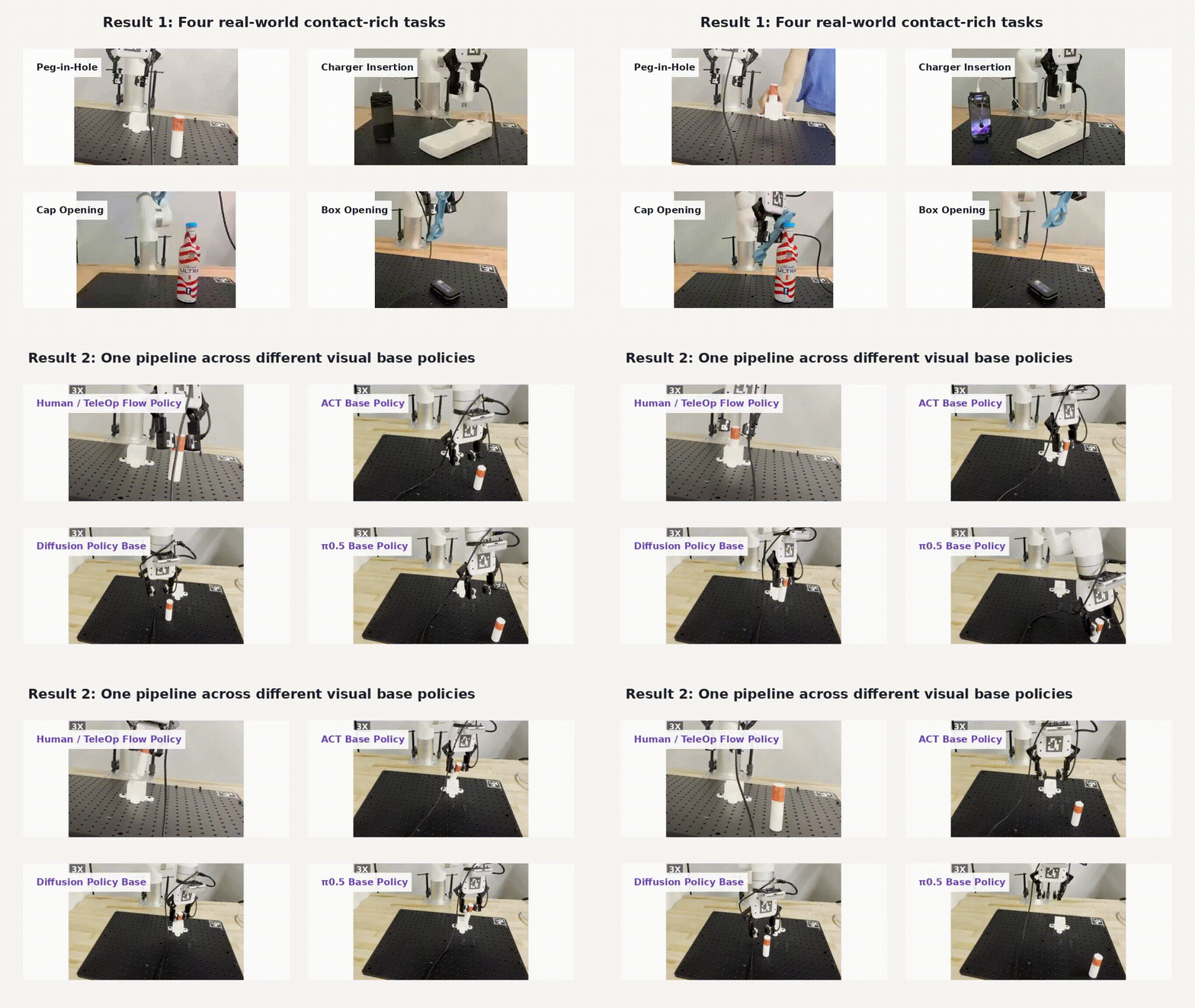
Kelin Yu*, Haode Zhang*, Harish Ravichandar, Yunhai Han, Ruohan Gao CoRL, 2026 RSS Tactile Sensing for Foundation Models Workshop, 2026 (Best Paper Award) project page | paper We propose OmniTacTune, a two-stage residual RL framework that efficiently adapts tactile feedback to pretrained visual policies. It requires neither offline tactile demonstrations nor base-policy fine-tuning and generalizes across diverse contact-rich tasks, visual policies, and tactile representations. Across four real-world tasks, it improves visual base policies from 5–40% to 85–100% success within only 40–80 minutes of online interaction. |
|
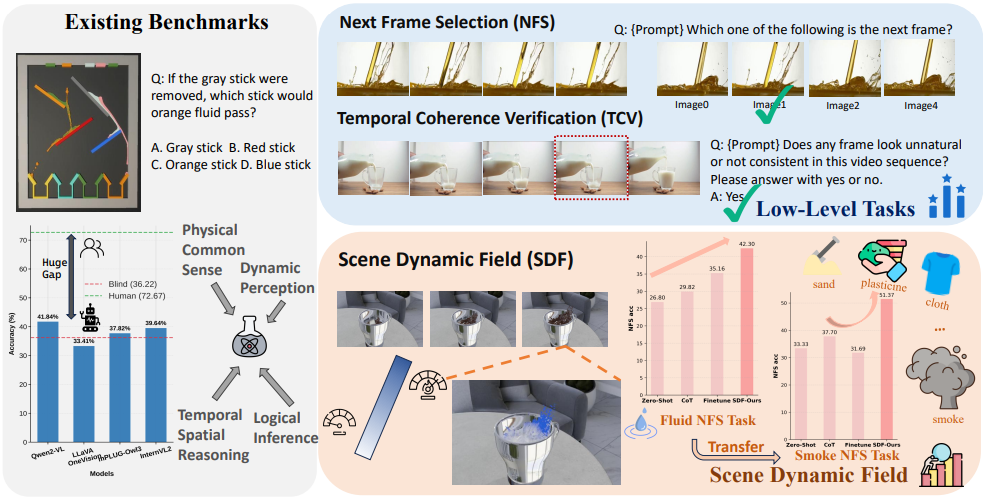
Nanxi Li, Xiang Wang, Yuanjie Chen, Haode Zhang, Hong Li, Yong-Lu Li ICLR, 2026 paper | code We propose Scene Dynamic Field (SDF), a cost-efficient framework that integrates physics simulators into multi-task fine-tuning, substantially improving MLLMs’ intuitive physics understanding and achieving strong generalization across physical domains. |
|
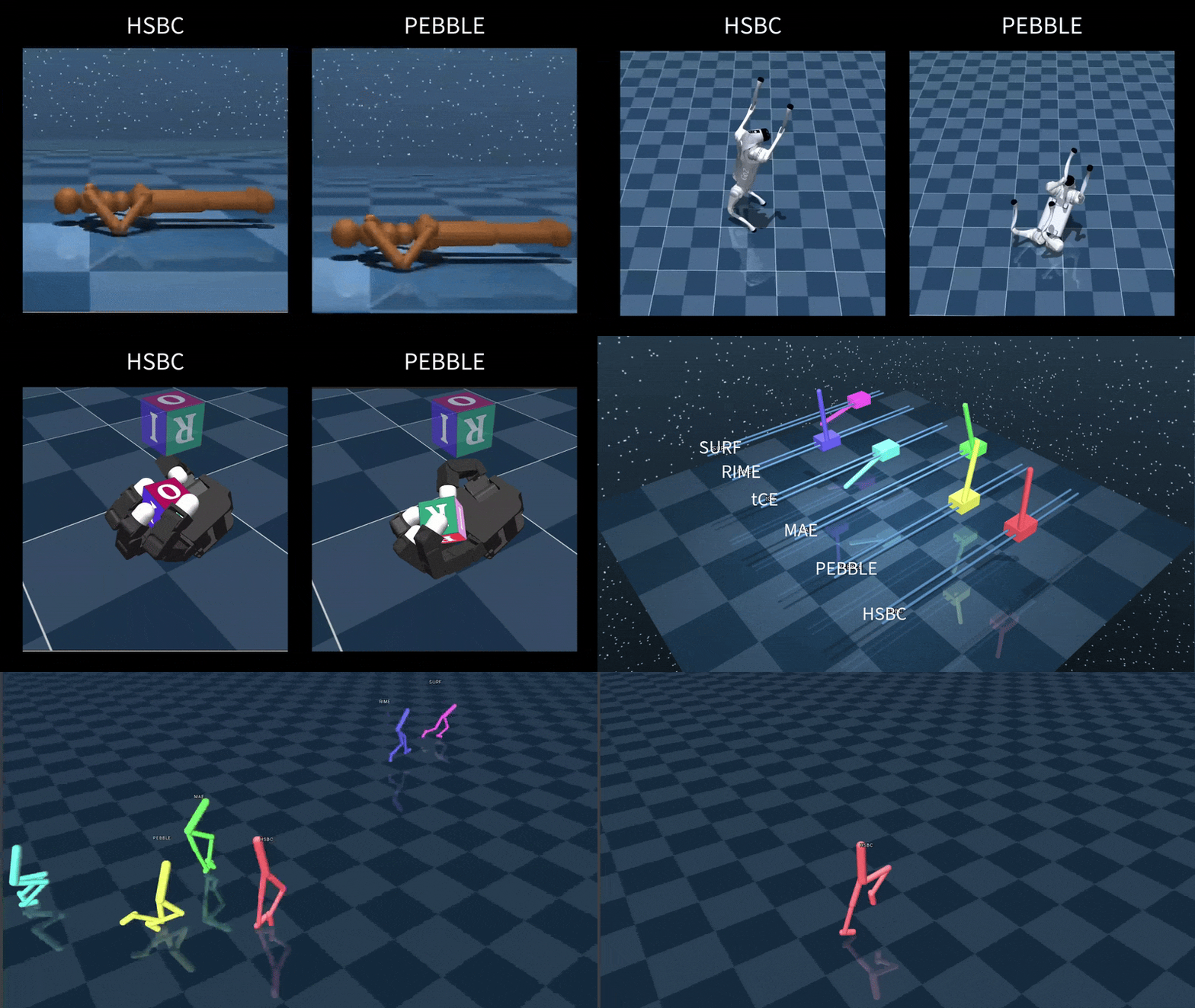
Zhixian Xie*, Haode Zhang*, Yizhe Feng, Wanxin Jin ICML, 2025 project page | paper | code We propose a novel geometric view of reward alignment as an iterative cutting process over the hypothesis space. Our batched cutting method significantly improves data efficiency by maximizing the value of each human preference query. We introduce a conservative cutting algorithm that ensures robustness to unknown erroneous human preferences without explicitly identifying them. |
ServiceConference Reviewer: ECCV 2026, CoRL 2026 |
|
The website is built upon this template. |